Grapiku built the Tartaruga Adventures website to strengthen the brand’s image as a luxury liveaboard service, make it easier to explore the boats and schedules, and encourage direct inquiries and bookings.
Client
Tartaruga AdventuresService
Industry

Tartaruga Adventures is a premium travel agency that offers experiences exploring the beauty of the Indonesian archipelago through a selection of luxury cruises, private charters, diving excursions, and stays at luxury resorts.
With extensive experience and in-depth knowledge of the Indonesian archipelago, Tartaruga helps travelers discover exotic destinations such as Komodo, Raja Ampat, Alor, the Banda Sea, and various other hidden islands. Each trip combines adventure with comfort and is tailored to the traveler’s needs.
When choosing a liveaboard trip, prospective travelers consider more than just the destination and price. They also need to understand the vessel’s character, cabin comfort, amenities, activities, and departure schedules before deciding on the right trip.
Tartaruga needs a website that can showcase this premium experience while helping prospective travelers evaluate their options more easily. The user journey must connect destination and vessel exploration with schedules, inquiries, and a direct booking path through Tartaruga.
Primary Objectives: To build a website that strengthens Tartaruga’s positioning as a provider of luxury liveaboard experiences, simplifies the process of selecting boats and schedules, and converts travelers’ interest into inquiries and direct bookings.
Premium travel requires a presentation that builds desire while providing the information needed to make a decision. Prospective travelers need to visualize the experience being offered, understand the differences between ships, and find a trip that fits their schedule and needs.
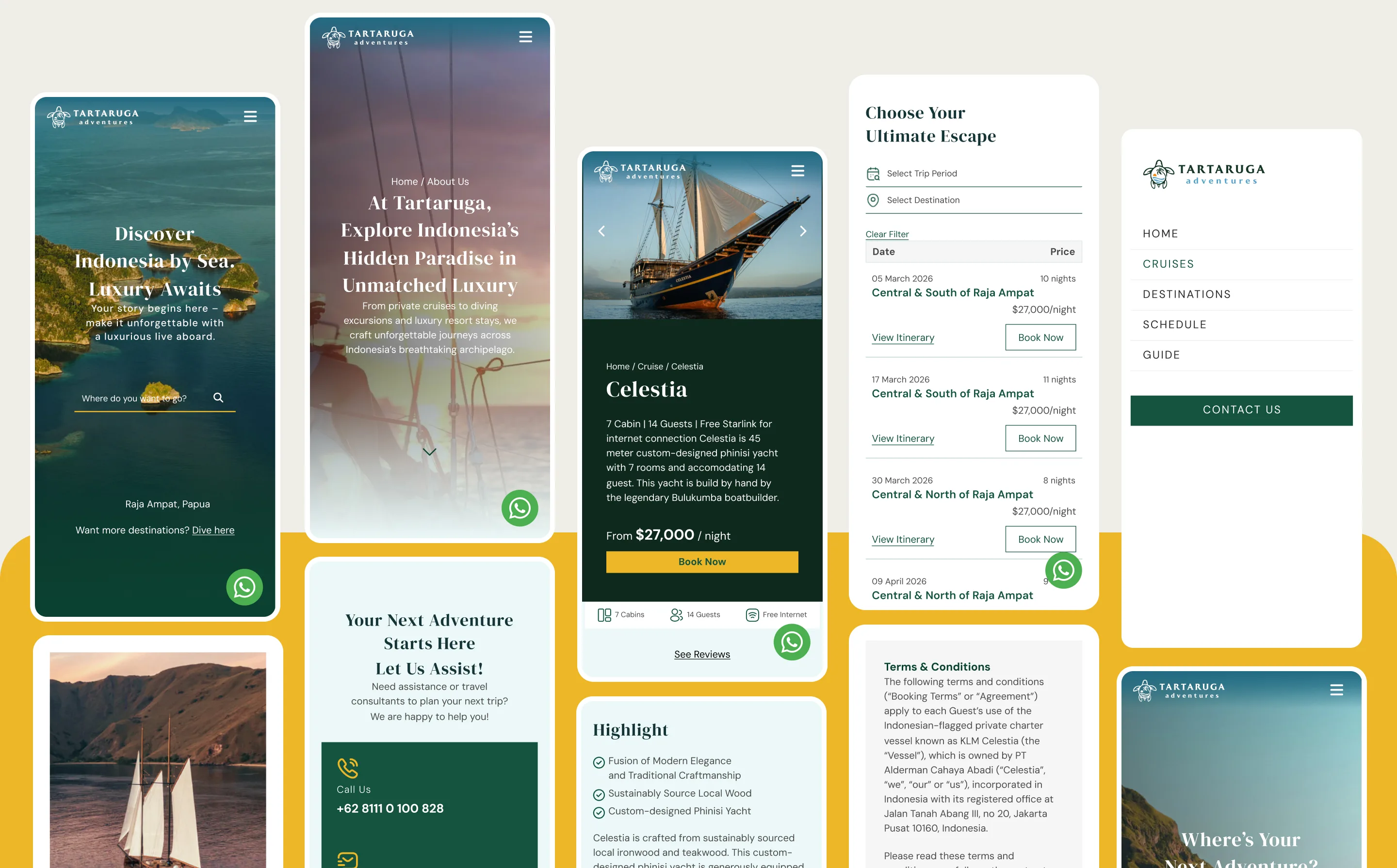
The website also needs to support exploration on mobile devices and provide clear next steps when users are ready to book or seek advice.
The ship’s luxury, the comfort of the cabins, and the beauty of the destinations must be translated into a compelling digital experience so that prospective travelers understand the value of the trip being offered.
Each cruise ship has different capacities, amenities, cabins, and types of experiences. Information needs to be presented consistently so that prospective travelers can evaluate their options based on their needs.
Trip options need to be matched with destinations, departure dates, duration, and price. Without a structured process, prospective travelers must sift through a lot of information before finding a suitable trip.
The gallery, ship details, and schedule listings contain a wealth of information. All of these need to remain easy to use on mobile screens and be linked to clear booking and inquiry pathways.
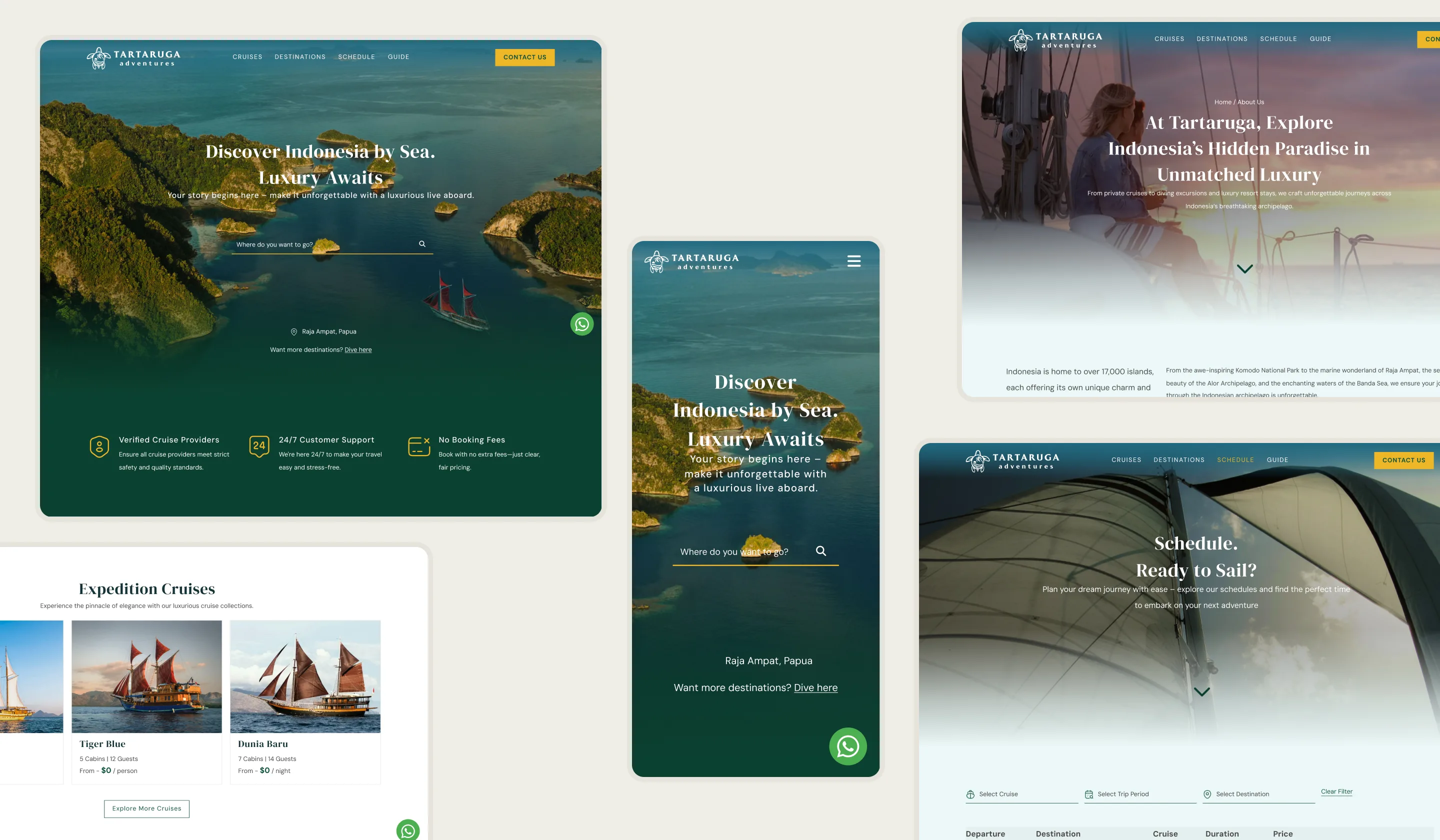
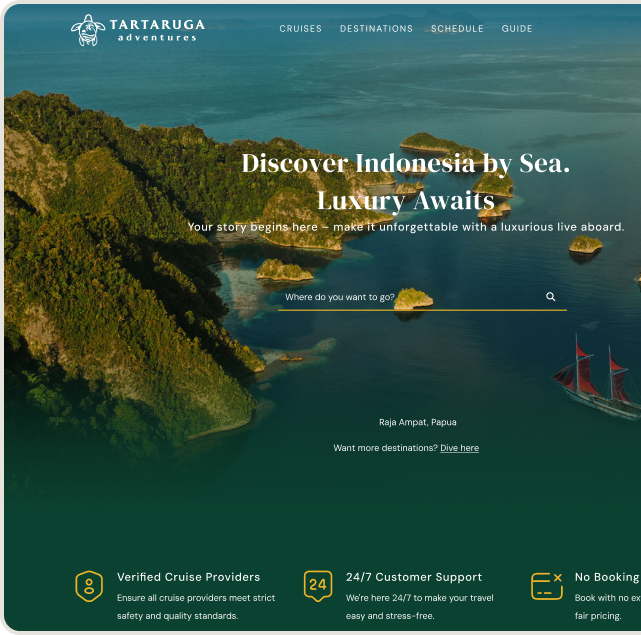
Grapiku built the Tartaruga website by positioning the travel experience as the gateway to exploration. Visuals of the ships and destinations reinforce the premium positioning, while the content structure helps prospective travelers understand their travel options before deciding on their next step.
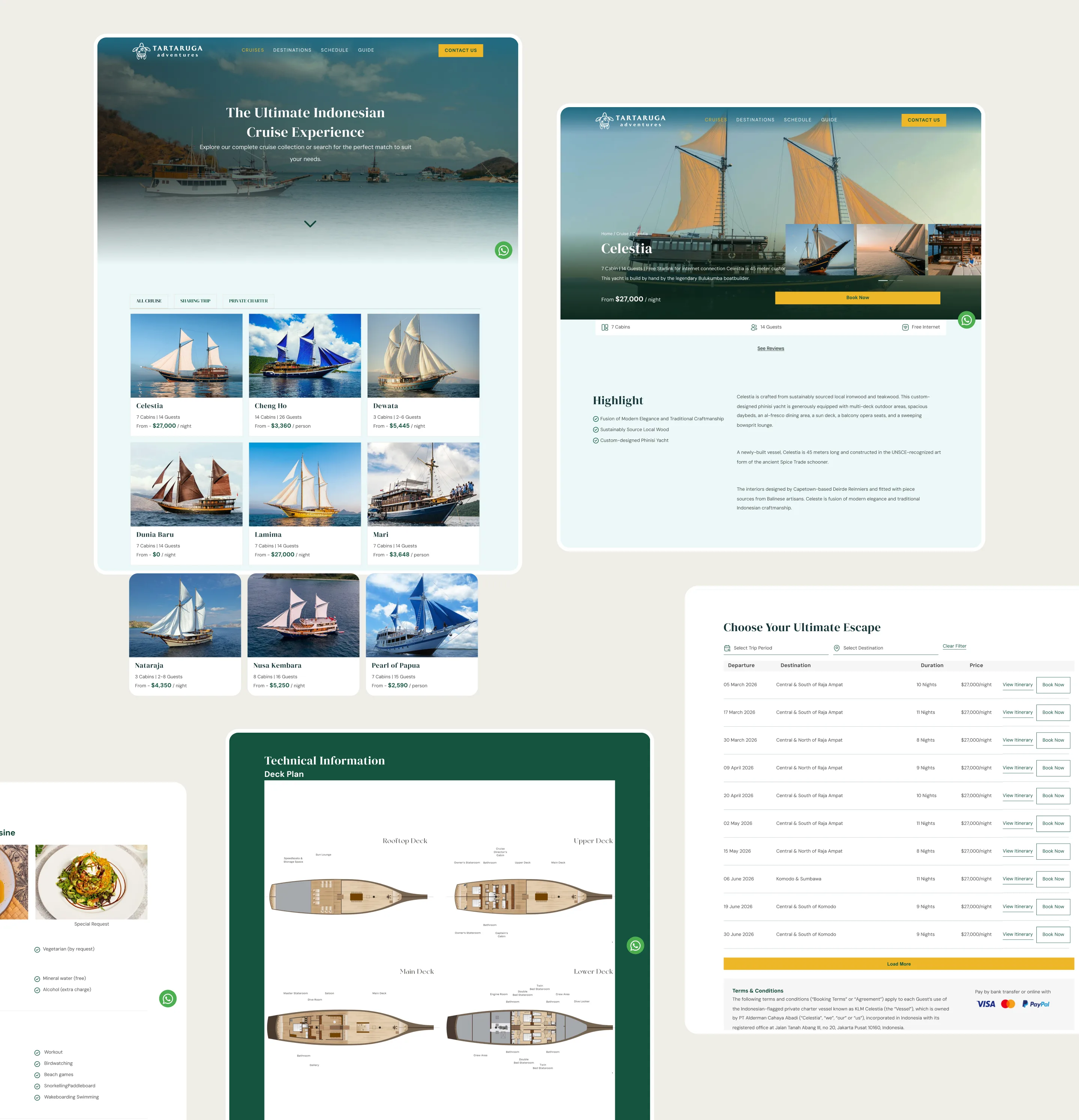
Each ship is presented on a dedicated page featuring amenities, cabins, deck plans, a photo gallery, and related schedules. The schedule listing complements this flow with travel options that can be filtered by ship, destination, and travel dates.
The booking engine and booking CTAs are positioned as the next step in the exploration process. Private charter requests are also linked to an inquiry form so prospective travelers can communicate their travel needs to the Tartaruga team. The entire interface is designed to be responsive, ensuring ease of use on both desktop and mobile devices.
Aligning the positioning of the luxury liveaboard, the target traveler, the service profile, and the goals for inquiries and direct bookings. The results serve as a guide for communication strategy, user experience, and website feature priorities.
Mapping the information needs of prospective travelers and the available content, including ship profiles, cabins, amenities, deck plans, photo galleries, destinations, and itineraries. This phase helps determine what information needs to be added so that each trip can be presented consistently.
Research into the digital experiences of premium cruise and travel services to map out standards for ship presentations, destination exploration, schedule searches, and booking processes. The findings were used as a reference for designing an experience aligned with Tartaruga’s positioning.
Information architecture design that connects destinations, vessel collections, vessel details, schedules, and inquiries. The user flow is structured so that prospective travelers can begin their exploration by selecting a vessel or travel time, then proceed to the appropriate booking path.
Design of the information hierarchy for the homepage, vessel listings, vessel details, schedule, and inquiry pages. The focus is on making it easier to evaluate options, ensuring the information is easy to read, and placing the booking path at relevant points.
Visual development that conveys a premium travel experience through photography, typography, composition, and interaction. Desktop and mobile designs are harmonized to preserve the atmosphere of the ship and the destinations without compromising usability.
Website development, including ship pages, schedule listings, filters, a gallery, and booking and inquiry pathways. The interface components were developed to be responsive so that users can explore information on screens of various sizes.
Implementation of ship and voyage content into the website structure, including cabin information, amenities, deck plans, galleries, and related schedules. Consistency in presentation is maintained so that each ship can be evaluated using relevant information.
Testing of navigation, schedule listings, filters, vessel details, CTAs, and forms prior to launch. Both desktop and mobile interfaces are reviewed to ensure that navigation and the booking flow function consistently.
Grapiku highlights the booking engine and booking CTAs within the ship exploration and schedule workflows. Prospective travelers can first explore their travel options and then proceed to the booking process directly from the page they’re currently viewing.
For private charter needs, the website provides an inquiry channel so prospective travelers can communicate their specific needs and requests to the Tartaruga team. This approach supports both scheduled and private trips through appropriate next steps.

The interactions are designed to help prospective travelers navigate the information step by step. The fleet is categorized into shared trips and private charters, while the gallery and vessel information sections help users explore the experiences on offer.
Schedule filters enhance the experience by narrowing down travel options. The website not only features attractive visuals but also helps prospective travelers find the information they need before contacting Tartaruga

Responsive design is implemented on the homepage, ship hero pages, schedule listings, destination content, menus, and cabin information. The content hierarchy and CTA placement are optimized so users can easily understand their travel options even on smaller screens.
Photography remains a key element in conveying the atmosphere of the ship and destinations, supported by information presented in a way that ensures readability. Prospective travelers can continue exploring and proceed to make an inquiry or booking directly from their device.

Each ship has a dedicated page that showcases its voyage characteristics, guest capacity, amenities, cabin options, deck plan, and photo gallery. The corresponding schedule complements this information so users can understand both the ship’s experience and their voyage options.
This structure helps prospective travelers evaluate ships more thoroughly. They can assess the suitability of the accommodations and amenities before proceeding to select a schedule or make a private charter inquiry.

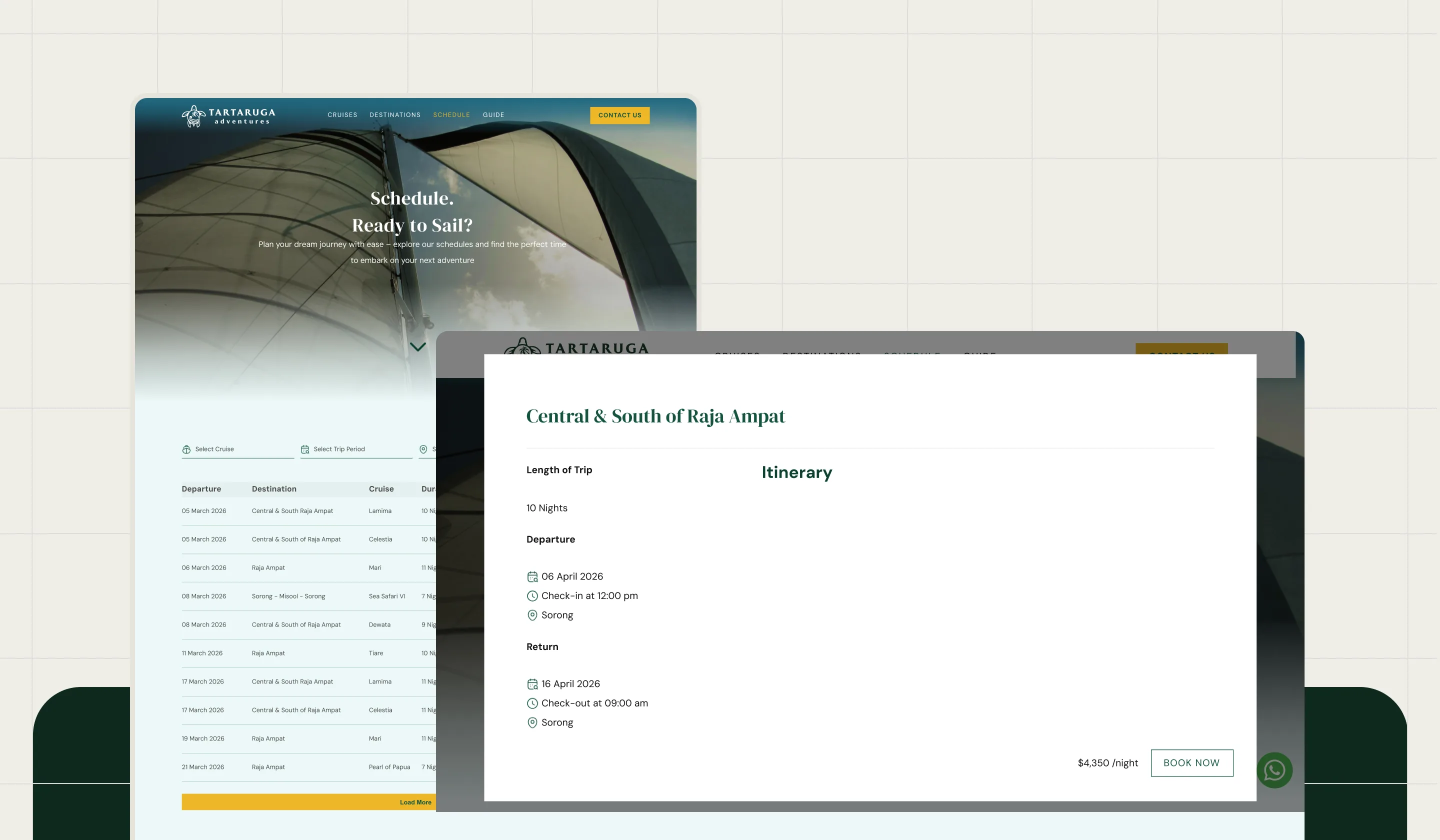
Grapiku compiles schedule listings that display departure dates, destinations, ships, durations, and prices all in one view. Users can narrow down their options using filters for ships, destinations, and travel dates.
This listing serves as a starting point for prospective travelers who begin their search based on travel dates or destinations. Schedule information is also displayed on the ship’s page, allowing users to browse options for their preferred ship without having to start a new search.
The selection of ships is featured on a dedicated page with information on amenities, cabins, deck plans, photo galleries, and related itineraries.
Ship schedules are presented in a structured list to help prospective travelers find the right ship, destination, and departure time.